Nigeria’s emerging opposition coalition has begun moving from political consultations to the establishment of a formal working structure ahead of the 2027 general elections, with participating parties agreeing to expand the coalition and activate committees responsible for implementing its resolutions.
The development followed the inaugural meeting of the coalition’s Central Leadership Committee, which was held on Wednesday, September 16, following the opposition parties’ August 31 summit in Abuja.
According to a statement issued on Thursday by Salihu Moh. Lukman on behalf of the coalition parties, the Central Leadership Committee resolved to admit additional opposition parties that have expressed interest in joining the initiative.
Coalition seeks wider opposition participation
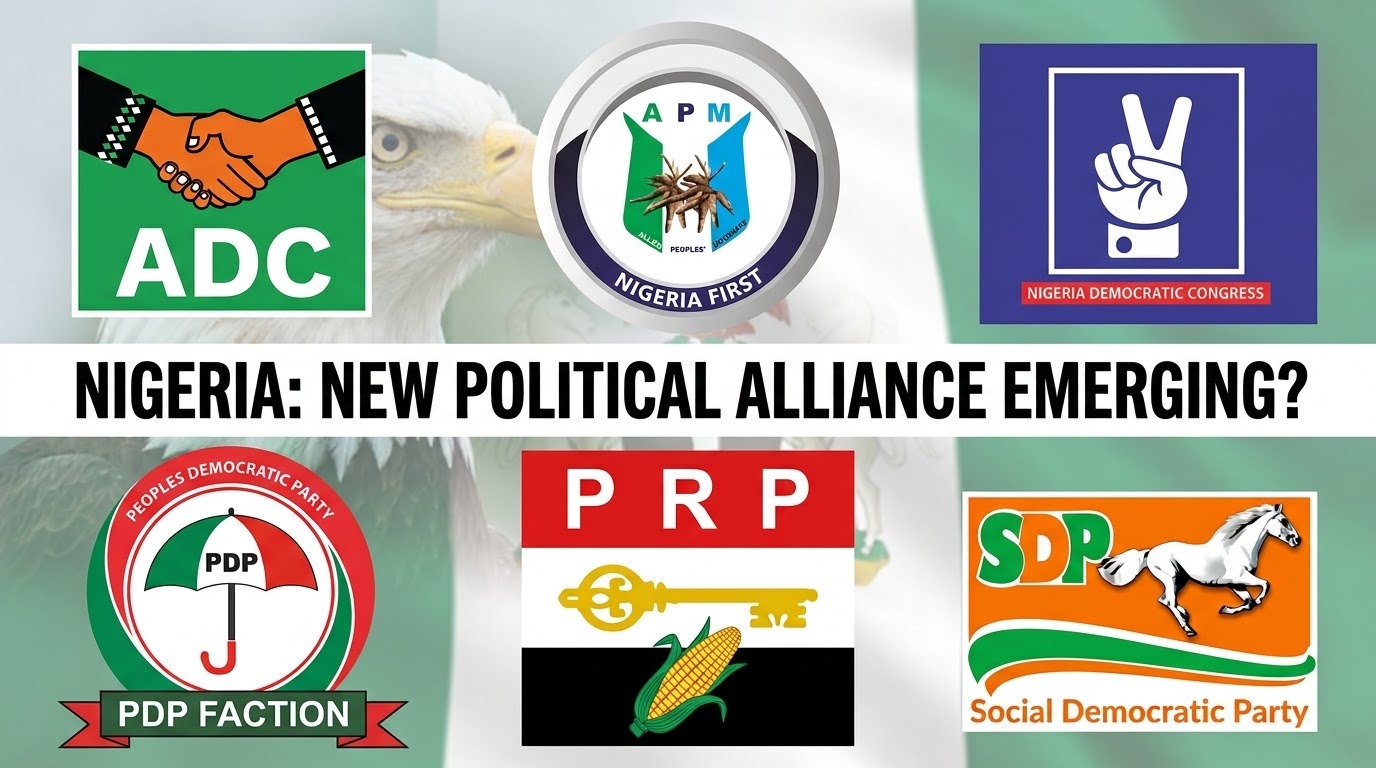
The coalition currently brings together the African Democratic Congress (ADC), Allied Peoples Movement (APM), Nigeria Democratic Congress (NDC), a faction of the Peoples Democratic Party (PDP), Peoples Redemption Party (PRP) and Social Democratic Party (SDP).
The leadership committee said other opposition parties interested in participating would be considered for admission.
The decision is part of a broader effort to create a coordinated opposition arrangement ahead of the 2027 elections.
The coalition’s latest meeting also reviewed the communiqué adopted at the August 31 opposition summit and began work on translating its proposals into practical structures.
Committees to begin work next week
The coalition is preparing to activate its Publicity Committee, Legal Committee and five Working Groups established at the August summit.
Participating parties have been directed to submit the names of their nominees to the coalition secretariat by the close of work on Friday, September 18.
The committees and working groups are expected to begin operations between September 21 and 27.
The Central Leadership Committee is scheduled to meet again on September 23.
The working groups are expected to develop proposals around issues including opposition cooperation, democratic renewal, a national reform programme, a proposed transition arrangement and the process for selecting a common presidential candidate.
Leadership rotation adopted
In an effort to prevent any one party from dominating the coalition, the Central Leadership Committee agreed that responsibility for chairing its meetings would rotate among participating parties in alphabetical order.
The coalition said the arrangement was intended to reflect its stated principle of equal participation and mutual respect among the parties.
The leadership structure is therefore being designed around cooperation rather than the immediate merger of the participating parties.
Single presidential candidate remains a major issue
One of the most significant questions facing the opposition alliance is whether the participating parties can eventually agree on a common presidential candidate for 2027.
The August summit established a working framework for addressing that question, but no consensus presidential candidate has been announced.
Separately, the Movement for Credible Elections (MCE) has begun consultations with opposition presidential candidates and party leaders as part of an effort to facilitate a single opposition candidate.
Professor Pat Utomi, who chairs the MCE Political Commission, is expected to lead closed-door consultations with several opposition figures. Those listed for engagement include Atiku Abubakar, Peter Obi, Adewole Adebayo, Seyi Makinde, Donald Duke, Sandy Onor, Peter Agada and Omoyele Sowore.
The MCE says its proposed process would consider factors including national acceptability, leadership record, policy orientation, commitment to democratic institutions, capacity to unite the country and understanding of Nigeria’s constitutional and political challenges.
Coalition does not yet amount to a party merger
The current arrangement does not mean that the participating political parties have dissolved or formally merged into a single political party.
Rather, the coalition is attempting to establish a mechanism through which separate opposition parties can cooperate while retaining their individual identities.
The August summit had proposed a framework for cooperation, including discussions around a common programme and a possible common presidential candidate.
What happens next?
The immediate focus will be on putting the coalition’s committees and working groups into operation.
The deadline for submitting nominees is September 18, while the committees are expected to begin their work from September 21.
The Central Leadership Committee is also expected to reconvene on September 23.
Beyond establishing committees, the more difficult stage will be reaching agreement on issues such as the coalition’s common programme, leadership arrangements and the eventual selection of a presidential candidate.
For now, the latest development represents a move from discussions about opposition cooperation toward building an organisational framework for that cooperation ahead of the 2027 elections.