
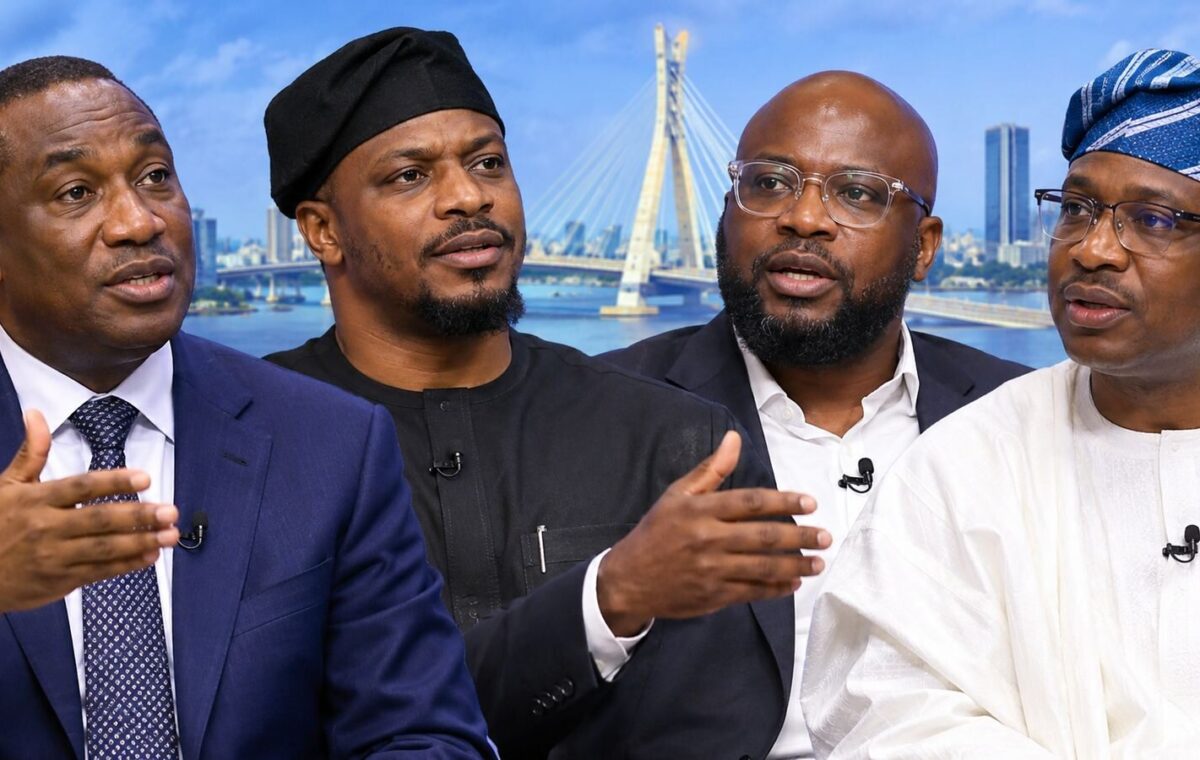
Lagos 2027: Hamzat, Rhodes-Vivour, Doherty Clash Over Housing, Education, Traffic, Flooding
Four governorship candidates in the 2027 Lagos State election have presented competing policy proposals on housing, education, transportation, flooding and economic development, exposing sharp differences over how to address the challenges confronting residents of Nigeria’s commercial capital.
The candidates, Obafemi Hamzat of the All Progressives Congress (APC), Gbadebo Rhodes-Vivour of the African Democratic Congress (ADC), Funso Doherty of the Nigeria Democratic Congress (NDC), and Deji Doherty of the Peoples Democratic Party (PDP), made their positions known on Sunday during a governorship debate organised by the Nigeria Debate Consortium in Lagos.
The debate, which brought together four major contenders for the Lagos governorship seat, provided a platform for the candidates to defend their political positions, assess the record of successive administrations and outline their proposed solutions to the state’s persistent challenges.
Flooding: Rhodes-Vivour Questions Government’s Approach
On environmental management and flooding, Rhodes-Vivour attributed the recurring challenges confronting Lagos to what he described as decades of poor governance and inadequate planning.
The ADC candidate advocated a technology-driven approach to environmental management, arguing that Lagos needed a development strategy that prioritised residents’ safety and environmental sustainability.
He also raised concerns about activities around Makoko, warning that indiscriminate sand-filling could worsen the state’s vulnerability to flooding and the effects of climate change.
Hamzat, however, defended the state’s existing drainage infrastructure, describing the network as extensive and arguing that the major challenge was keeping drainage channels free from refuse and other obstructions.
He maintained that effective maintenance of existing infrastructure remained essential to reducing flooding.
Transportation: Hamzat Unveils 4,000 CNG Buses, 77 Electric Ferries
Transportation was another major area of disagreement.
Hamzat outlined plans to strengthen Lagos’ multi-modal transportation system through investments in road, rail and water transportation.
The APC candidate said the government was targeting the movement of one million passengers daily through a fleet of 4,000 compressed natural gas-powered buses.
He also announced plans to expand water transportation through the deployment of 77 electric ferries, which he said would help reduce pressure on the state’s road network.
Rhodes-Vivour, however, argued that traffic congestion should not become a normal part of life for Lagos residents.
He proposed expanding rail and water transportation, including cable car services, while arguing that private-sector participation could help deliver additional infrastructure without placing the entire financial burden on the government.
Housing: 100,000 Units, Mortgage Facilities Dominate Debate
Housing affordability emerged as another major point of disagreement.
Rhodes-Vivour promised to deliver more than 100,000 housing units if elected, arguing that successive administrations had concentrated development policies around the interests of affluent residents while leaving many ordinary Lagosians struggling with accommodation.
He also called for stronger protection for tenants, including a proposal requiring landlords to give at least six months’ notice before increasing rents.
Hamzat defended the government’s housing interventions, saying the state had developed 24 housing estates within the last eight years.
He promised to expand mortgage facilities, complete ongoing housing projects and strengthen enforcement of existing tenancy regulations.
The APC candidate also proposed a mortgage arrangement that would allow residents to make an initial payment of 10 per cent and spread the remaining cost over 25 years.
Meanwhile, Funso Doherty argued that the fundamental problem was the shortage of housing relative to the state’s growing population.
He maintained that government must take a more active role in expanding housing supply rather than relying solely on rent regulation.
The NDC candidate also proposed establishing an ombudsman’s office to address complaints involving landlords and tenants.
Education: NDC Candidate Promises Truly Free Education
On education, Funso Doherty made a major social policy promise, pledging to introduce what he described as genuinely free education in Lagos.
He argued that removing tuition fees alone was insufficient if parents were still required to pay examination fees and other charges before their children could complete their education.
According to him, no child should be denied access to education because of their parents’ financial circumstances.
He also promised to introduce a programme that would provide pupils in public schools with one affordable meal daily.
The proposal placed education and social welfare at the centre of the NDC candidate’s campaign message.
Lagos Debt: PDP Candidate Raises Financial Concerns
The state’s debt profile also featured prominently during the debate.
Deji Doherty of the PDP questioned the financial burden associated with Lagos’ domestic and external debts, arguing that debt servicing was placing pressure on government resources.
He claimed that the state was spending between N19 billion and N20 billion on debt servicing, describing the obligation as a burden that could limit the government’s capacity to address other development priorities.
However, the figure was presented as the candidate’s claim during the debate and requires examination against official budget and debt-service records.
Doherty also called for stronger financial independence for local government areas, arguing that councils should have sufficient resources to address problems at the grassroots.
He maintained that local governments, being the closest tier of government to residents, should be empowered to provide essential services.
The Bigger Question: How Will The Promises Be Funded?
Beyond the competing proposals, the debate raises important questions about the feasibility, funding and implementation of the candidates’ promises.
From the proposed 100,000 housing units to 4,000 CNG buses, 77 electric ferries, free education and expanded infrastructure, Lagos residents will need more than campaign commitments.
They will need clear explanations of the financial requirements, implementation timelines, funding arrangements and measurable targets attached to these proposals.
The candidates also need to explain how their respective administrations would address the relationship between rapid urban development, population growth, environmental protection and the rising cost of living.
With the 2027 governorship election approaching, the debate has provided Lagos voters with an opportunity to compare the candidates’ priorities and demand greater accountability.
Ultimately, the central issue is not simply who makes the biggest promises, but how each candidate intends to translate proposed policies into measurable improvements in the lives of Lagos residents.