
2027: Tinubu Unveils 12 Fresh Promises to Nigerians Amid Questions Over Old Ones
President Bola Tinubu has made another round of promises to Nigerians, covering electricity, agriculture, employment, industrial development, education and the cost of living, as he intensifies his campaign for a second term ahead of the 2027 presidential election.
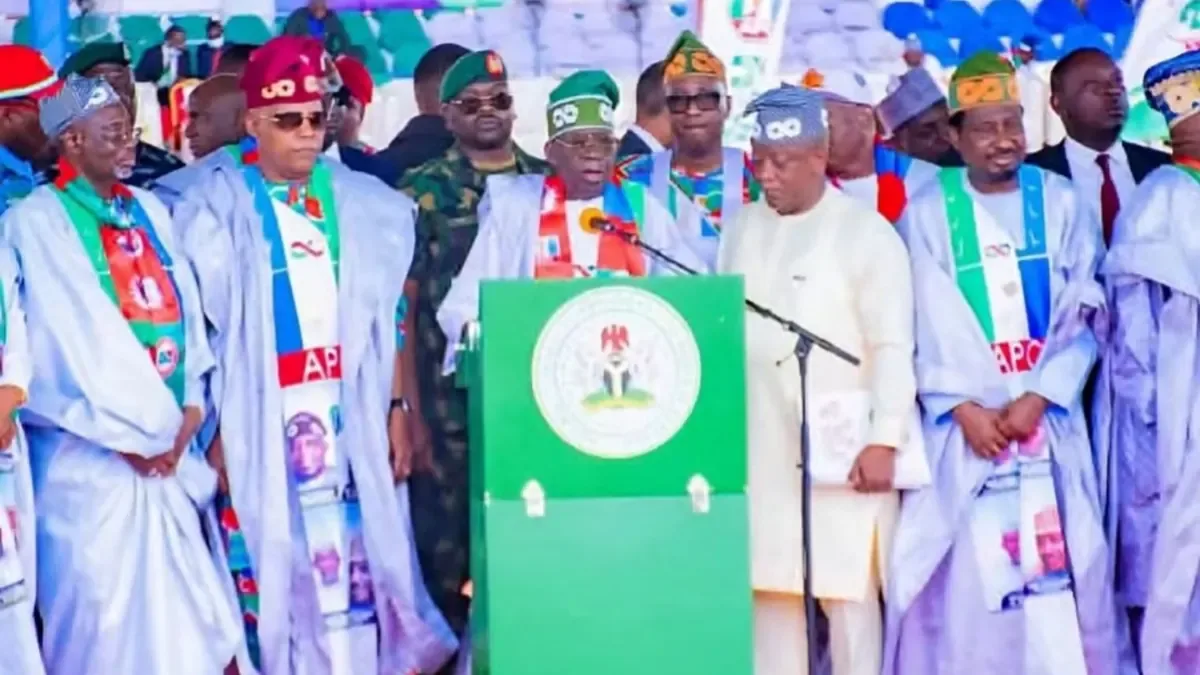
Tinubu made the promises on Tuesday, November 10, 2026, while addressing supporters of the All Progressives Congress (APC) at the party’s presidential campaign rally in Dutse, the Jigawa State capital.
At the rally, the President outlined what his administration intends to achieve, promising improved living conditions and increased economic opportunities if given another four-year mandate.
However, several of the commitments are not entirely new, as they echo promises Tinubu made during his 2023 presidential campaign and subsequent public engagements.
Below are 12 major promises and commitments made by the President at the rally.
1. Reliable Electricity Supply
Tinubu promised to provide Nigerians with reliable electricity, insisting that his administration would address the country’s persistent power challenges.
“We will reduce the cost of living. We will provide reliable power, not the whole privatisation that is not working. We provide you with reliable power in this Nigeria,” he said.
2. Reduction in Cost of Living
The President pledged to reduce the cost of living, assuring Nigerians that his administration would continue pursuing policies aimed at improving their economic conditions.
3. Stronger Industrial Base
Tinubu promised to stimulate a stronger industrial base for Nigeria, saying his administration would support local industries and expand economic activities.
4. Support for Small Businesses
He pledged government assistance for nano, small and medium-scale businesses to enable them to grow, create wealth and contribute more to the economy.
5. More Employment Opportunities
The President promised to expand job opportunities and improve income-generating activities for Nigerians, particularly through industrial growth and support for businesses.
6. Agricultural Subsidies
Tinubu promised increased investment in agriculture, including subsidies to support farmers and improve agricultural production.
7. Interest-Free Loans for Farmers
He pledged to introduce interest-free loans for farmers, particularly small-scale farmers, to improve access to financing and encourage agricultural productivity.
8. Six Mechanised Farming Centres
The President announced plans to establish mechanised farming centres across the country’s six geopolitical zones to improve access to modern farming equipment and reduce dependence on manual agricultural practices.
9. Lower Food Prices
Tinubu expressed confidence that Nigeria could achieve food sufficiency and promised to bring down food prices through increased agricultural production.
“We have the arable land. We have the commitment. We have the people. We can feed ourselves, and we will bring the food prices down to the minimum,” he said.
10. Increased Agricultural Research
He promised greater involvement of Nigerian universities in agricultural research and development, saying academic institutions would play a stronger role in improving agricultural productivity.
11. Sustained Student Loan Programme
The President described the Nigerian Education Loan Fund (NELFUND) as a weapon against poverty and promised that his administration would sustain the programme to improve access to higher education.
He also reiterated his directive that funds recovered by the Economic and Financial Crimes Commission (EFCC) from financial irregularities should be channelled towards financing the student loan scheme.
12. No Return to Petrol Subsidy
Tinubu ruled out restoring petrol subsidy, describing those promising to bring it back as liars.
He questioned how the government would finance road construction, maintenance and other public commitments if subsidy payments were reinstated.
Promises Repeated, Questions Remain Over Delivery
While the promises cover critical areas of Nigeria’s economy, a major question arising from Tinubu’s latest declarations is how many of the commitments are new and how many represent a repetition of earlier assurances.
During his 2023 presidential campaign, Tinubu made a strong commitment to improving electricity supply, promising Nigerians that they would have electricity and no longer pay estimated bills.
He went as far as challenging Nigerians not to vote for him for a second term if he failed to fulfil that promise, unless he provided adequate reasons for his inability to deliver.
More than three years into his administration, however, reliable electricity remains a major challenge for households and businesses, with frequent power disruptions continuing to affect economic activities.
Although the administration has introduced interventions, including the Electricity Act 2023, the Presidential Metering Initiative and efforts to address outstanding debts in the power sector, the central promise of dependable electricity for Nigerians remains unfulfilled.
The situation is not entirely different in agriculture, where the President’s earlier commitments to increase food production, improve farmers’ incomes and make food more affordable are yet to translate into the level of improvement Nigerians were promised.
Although the government has announced several agricultural interventions, the affordability of food and the cost of production remain major concerns for households and farmers.
Similarly, promises of expanded employment opportunities, stronger industrial development and improved living conditions are again featuring prominently in the President’s campaign message.
The administration may point to its ongoing reforms and interventions as evidence of progress. However, the critical question for many Nigerians is whether those efforts have produced measurable improvements in their everyday lives.
With the 2027 presidential election approaching, Tinubu is once again asking Nigerians to trust his administration with another mandate, while revisiting several commitments that featured prominently in his earlier campaign.
The latest promises therefore place renewed attention on the government’s existing record and the extent to which its previous assurances have translated into tangible results.
For Nigerians, the issue is no longer just about what the President says he intends to do, but how his latest promises will be different from those made before.