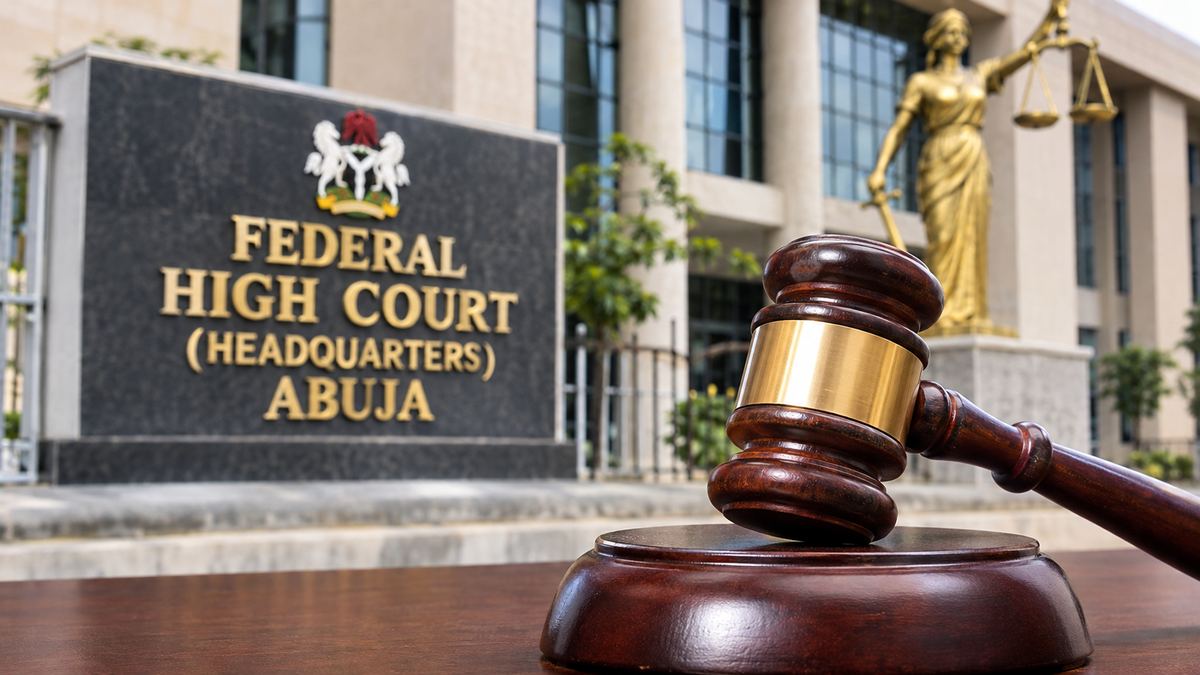
The Federal High Court in Abuja has admitted written statements and video recordings of six individuals standing trial over an alleged plot to overthrow President Bola Tinubu’s administration, dismissing their claims that the evidence was obtained through torture, intimidation and coercion.
Justice Joyce Abdulmalik delivered the ruling on Thursday, November 5, 2026, following a trial-within-trial conducted to determine whether the statements and recordings presented by the Federal Government were voluntarily obtained.
The judge held that the defendants failed to establish that they were tortured, threatened, induced or forced by military investigators to make the statements and participate in the recorded interrogations.
She consequently dismissed their objections and admitted the disputed statements and video recordings as exhibits in the ongoing criminal proceedings.
The six defendants are retired Major General Mohammed Ibrahim Gana, retired Naval Captain Erasmus Ochegobia Victor, serving Police Inspector Ahmed Ibrahim, Zekeri Umoru, Bukar Kashim Goni and Abdulkadir Sani.
Defendants Face 13-Count Charge
The Federal Government arraigned the six defendants on April 22, 2026, on a 13-count charge bordering on treason, terrorism, failure to disclose security intelligence and money laundering allegedly connected to terrorism financing.
The charge, marked FHC/ABJ/CR/206/2026, was filed by the Office of the Attorney-General of the Federation.
According to the prosecution, the defendants allegedly conspired in September 2025 to wage war against the Nigerian state with the intention of overthrowing the democratically elected government.
The defendants, however, have denied the allegations and pleaded not guilty to the charges.
Defence Challenged Admissibility of Statements
The latest ruling followed objections raised by defence lawyers, who argued that their clients’ statements were obtained through torture, intimidation and other forms of coercion during military interrogation.
They also questioned the circumstances surrounding the recordings and challenged the admissibility of the materials under applicable legal provisions.
The court consequently ordered a trial-within-trial to determine whether the disputed statements were voluntarily made.
During the proceedings, the prosecution presented four witnesses, including an Army officer identified by the codename “AAA”, who tendered video recordings of the defendants’ interrogations.
After reviewing the evidence, Justice Abdulmalik ruled that the defendants failed to substantiate their allegations of coercion, describing their claims as an afterthought.
Court Fixes December 7 and 10 for Continuation
Following the ruling, the court fixed December 7 and 10, 2026, for continuation of the substantive trial.
The admission of the statements and recordings allows the prosecution to rely on the materials as part of its evidence against the defendants.
However, the ruling does not amount to a conviction or establish the guilt of any of the accused persons.
The defendants will still have the opportunity to defend themselves as the proceedings continue.
The case has attracted national attention because of the seriousness of the allegations and their implications for Nigeria’s constitutional order, democratic institutions and national security.