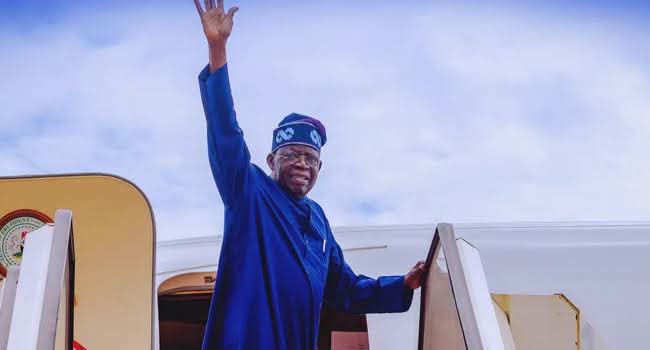
President Bola Ahmed Tinubu’s prolonged stay outside Nigeria has become more than a question of travel. It has become a question of accountability.
When the Presidency announced on August 30 that President Tinubu was leaving Nigeria for a three-week working vacation in Europe, Nigerians had every reason to understand the arrangement as clearly defined. Three weeks meant three weeks.
But September 21 came and went. The Presidency announced that the President’s stay had been extended by a few days and that he would return at the weekend. That weekend also passed without the President’s return. His itinerary was subsequently adjusted again, with September 29 now reported as the expected date of his arrival in Lagos.
This is where the frustration of Nigerians becomes understandable.
The problem is not that a President travels. No reasonable person expects the Nigerian President to remain permanently within Nigeria’s borders. International diplomacy, investment engagements, bilateral meetings and other state responsibilities necessarily require foreign travel.
The problem is the manner in which Nigerians are being kept guessing.
A government that asks citizens to endure economic hardship in the name of sacrifice should itself demonstrate the highest standards of transparency and responsibility. Citizens should not have to piece together presidential movements from media reports, anonymous sources and successive changes to an itinerary.
The Presidency says President Tinubu has remained in touch with officials at home and has continued directing the affairs of government from abroad. It has also pointed to his meetings in France and his directives on national matters as evidence that he remains engaged.
Fair enough.
But remote communication is not the same thing as physical presence, particularly when the country is confronting serious economic, security and social challenges.
The President’s prolonged absence has also generated questions around Section 145 of the 1999 Constitution and whether the appropriate constitutional arrangements were made concerning the exercise of presidential functions during an absence exceeding the originally announced period. Reports indicate that opposition figures and some lawyers have publicly raised these questions, while Senate President Godswill Akpabio has maintained that there is no vacancy in Aso Rock and that Tinubu remains in charge.
These are not questions that should be dismissed as political noise.
They deserve clear answers.
The Presidency should tell Nigerians plainly: Why was the original return date changed? Why was the subsequent weekend return also missed? Where exactly is the President, what official engagements necessitated the prolonged stay, and what constitutional arrangements govern the exercise of presidential authority during this period?
Nigerians are not asking for unnecessary details about the President’s private life. They are asking for transparency concerning the public office they entrusted to him.
There is also a larger issue here.
Nigeria is not a small organisation that can be run indefinitely through messages, phone calls and delegated appearances. It is a country of more than 200 million people facing insecurity, economic pressures, unemployment, poverty and institutional challenges. The Presidency therefore has a responsibility not merely to govern, but to communicate clearly with the people.
And this is where the administration’s handling of the matter has fallen short in the eyes of many Nigerians.
Every new promised return date followed by another adjustment naturally breeds suspicion. Every unexplained extension creates another round of speculation. Every silence leaves room for rumours to fill the information vacuum.
That is unnecessary.
The government has the means to end the speculation: tell Nigerians what is happening.
Even more troubling is the impression created when senior government officials offer explanations that appear to generate more questions than they answer. Senate President Godswill Akpabio, for instance, defended Tinubu’s continued stay abroad by saying the President was doing things outside Nigeria that he could not do at home. That statement itself has understandably prompted the question: what exactly are those things that cannot be done in Nigeria?
The Nigerian people deserve a government that speaks to them plainly.
They deserve a Presidency whose official timetable means what it says.
They deserve to know when their President leaves the country, why he leaves, how long he intends to stay and why, when circumstances change, those changes are properly explained.
This is not about supporting Tinubu or opposing Tinubu. It is about the dignity of the Nigerian citizen.
Citizens have endured fuel-price increases, rising living costs, insecurity and economic uncertainty. They have repeatedly been told that difficult decisions are necessary for the country’s future. In return, the least they should receive from government is transparency.
The Nigerian people should not be “dribbled” with one return date after another.
Government is a public trust, not a guessing game.
If there is a legitimate reason for President Tinubu’s prolonged stay abroad, the Presidency should state it clearly and put the matter to rest. If there are constitutional questions surrounding the exercise of presidential authority during his absence, the appropriate institutions should address them openly.
What Nigerians should not have to endure is another cycle of vague announcements, postponed dates and explanations that raise even more questions.
President Tinubu may eventually return to Nigeria, as the Presidency currently says he will.
But the larger question will remain: why was it so difficult to give Nigerians a straightforward account of what was happening?
A government confident in its actions should not be afraid of transparency.
Nigeria deserves better communication.
Nigeria deserves accountability.
And Nigerians deserve to be treated not as spectators being moved from one promised return date to another, but as citizens whose right to know what is happening in their country must be respected.