France is grappling with one of its most serious waves of civil unrest in years following nationwide protests that descended into violence, looting and clashes with security forces across several major cities.
The demonstrations, held on Saturday, October 17, drew hundreds of thousands of people protesting rising living costs, declining public services and deteriorating conditions in schools.
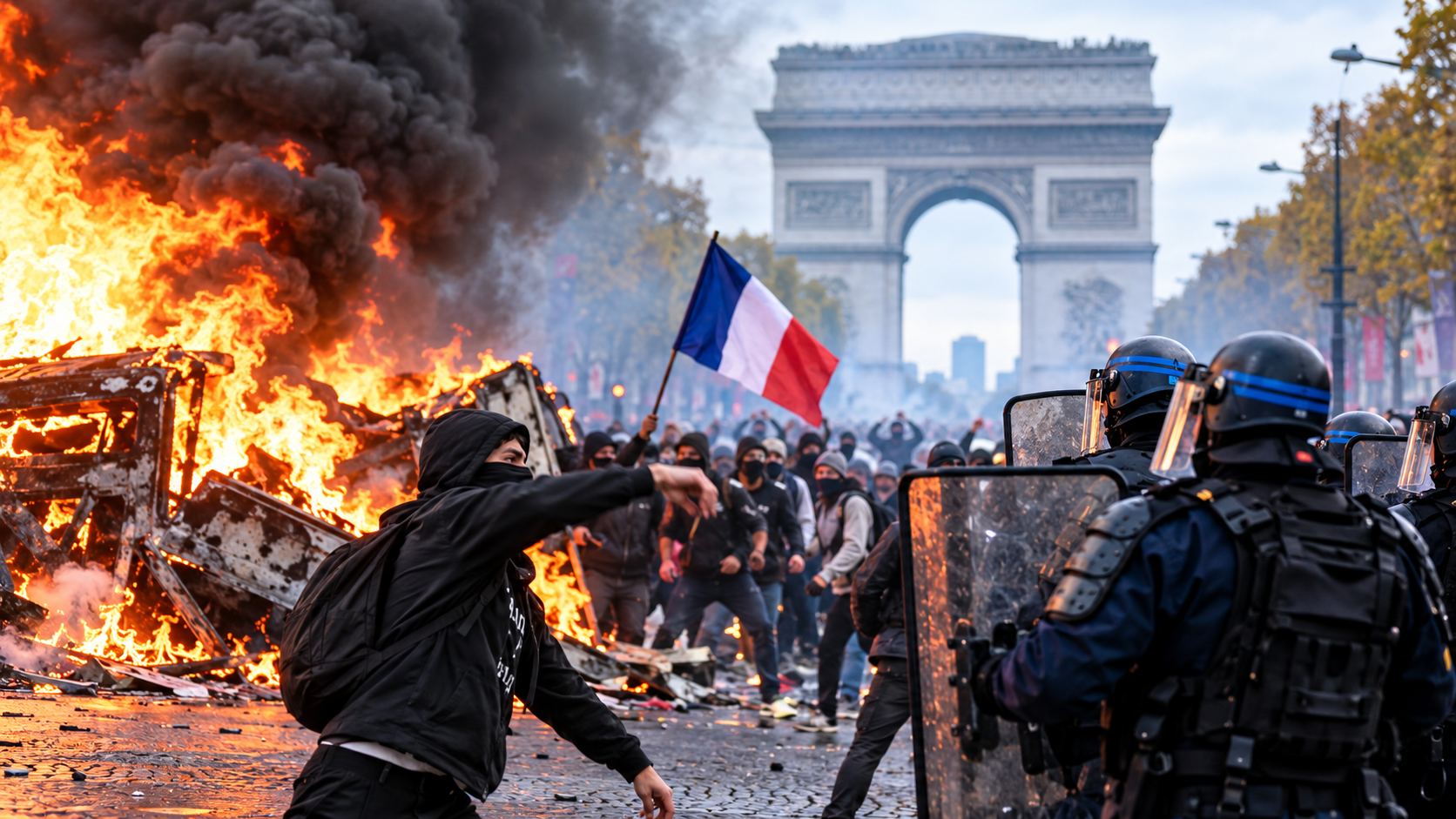
However, what began largely as peaceful demonstrations escalated in several locations, with groups of masked protesters setting vehicles and buildings ablaze, vandalising public property and looting businesses.
French authorities reported more than 1,800 arrests as the country began assessing the damage on Sunday, while more than 500 police officers, gendarmes and firefighters were reportedly injured. One protester also died after suffering a cardiac arrest.
The unrest affected cities including Paris, Marseille, Lyon, Bordeaux and Limoges, where public buildings and commercial establishments came under attack.
According to reports by Reuters and the Associated Press, the demonstrations reflect growing public frustration over economic pressures and the quality of public services.
How the Protests Began
The latest unrest emerged from weeks of student demonstrations over poor school facilities, teacher shortages and inadequate educational resources, particularly in disadvantaged communities.
The protests subsequently expanded into a broader movement attracting workers, trade union members, students and activists opposed to the rising cost of living and what they consider government neglect of ordinary citizens.
The demonstrations also drew support from activists associated with France’s Yellow Vest movement, which became prominent in 2018 following public anger over fuel prices and economic policies perceived to disproportionately affect working people.
The convergence of these groups transformed the student-led agitation into a wider expression of dissatisfaction with the country’s economic and political direction.
France’s largest trade union centres also backed the demonstrations, with organisers seeking to unite different sections of society around demands for improved living standards, better public services and greater economic fairness.
The French Interior Ministry estimated that approximately 550,000 people participated in Saturday’s demonstrations, although the CGT trade union put the nationwide turnout at about 800,000.
Violence Spreads Across Major Cities
The protests took a violent turn in several locations as groups of demonstrators clashed with police and targeted public and private property.
In Paris, security forces deployed tear gas and water cannon to disperse violent crowds, while shops were looted and vehicles set on fire.
In Marseille, masked protesters forced their way into the city hall, damaging the building and spray-painting its interior before police intervened.
The situation was also serious in Limoges, where the town hall was set ablaze, while a fire was reported at the tourism office in Lyon.
Businesses in several cities suffered damage as security agencies struggled to contain the violence.
French authorities have blamed radical groups and criminal elements for exploiting the demonstrations to engage in arson, looting and attacks on security personnel.
However, criticism has also emerged over police tactics, particularly the use of riot-control weapons against demonstrators. Allegations of excessive force have renewed questions about the handling of protests involving young people.
The violence has complicated efforts to separate peaceful demonstrators from individuals responsible for criminal acts.
Macron Government Under Pressure
The unrest presents another major challenge for President Emmanuel Macron, whose government is facing growing dissatisfaction over economic conditions, public spending and social inequality.
Macron condemned the violence and pledged that those responsible for attacks and destruction would face prosecution.
Prime Minister Sébastien Lecornu also criticised the disorder, attributing it to radical groups and criminal elements.
The government must now balance the restoration of public order with demands for meaningful action on the issues that prompted the demonstrations.
While authorities have emphasised the need to protect lives and property, critics argue that a security response alone may not resolve the underlying grievances.
The scale of the protests suggests that dissatisfaction extends beyond isolated complaints about school facilities and encompasses broader concerns about purchasing power, wages and the future of public services.
Echoes of the Yellow Vest Movement
The demonstrations have revived memories of the Yellow Vest movement, which shook France from 2018 with protests initially triggered by anger over fuel taxes and the cost of living.
That movement eventually developed into a wider challenge to Macron’s economic policies and governing approach.
The latest unrest similarly brings together different social groups united by dissatisfaction with economic pressures and the perceived failure of established political institutions to address their concerns.
However, the presence of violence and extensive property destruction introduces additional complications for a movement whose organisers are seeking to maintain public support.
The coming days will be critical in determining whether the demonstrations subside, spread further or develop into a sustained nationwide campaign.
2027 Presidential Election Looms
The unrest comes as France prepares for its next presidential election in 2027, adding a political dimension to the government’s response.
Macron is constitutionally barred from seeking an immediate third consecutive presidential term after completing his second term, making the forthcoming election a significant moment for the country’s political future.
Opposition parties are likely to use the demonstrations to challenge the government’s economic record and question its ability to maintain social cohesion.
The unrest could also deepen political polarisation as parties across the ideological spectrum attempt to position themselves as alternatives to the existing political establishment.
Nevertheless, the protests do not automatically signal the imminent collapse of Macron’s government. Their longer-term political consequences will depend on the duration of the unrest, the government’s response and whether demonstrators’ demands translate into sustained political mobilisation.
For now, France faces the immediate challenge of restoring order, supporting affected communities and addressing the grievances that have brought hundreds of thousands of people onto the streets.
The government’s ability to respond to these competing demands could shape public confidence in its remaining months in office and influence the political atmosphere ahead of the 2027 election.