President Bola Ahmed Tinubu’s latest announcement concerning the proposed Ibom Deep Seaport has once again raised expectations in Akwa Ibom State. But beyond the excitement that naturally accompanies a presidential declaration, an important question deserves to be asked: why should Nigerians, particularly the people of Akwa Ibom, believe that this promise will be different from the previous ones?
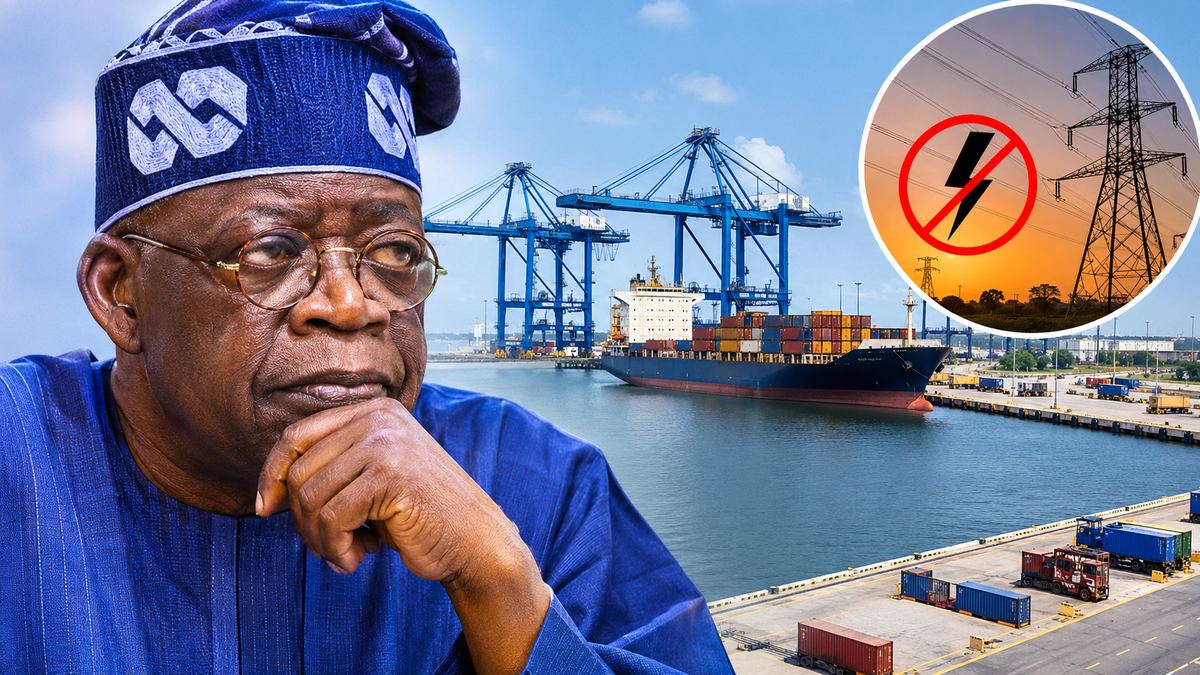
At the APC campaign rally in Uyo on Friday, November 6, 2026, Tinubu reportedly announced his approval of the long-awaited deep seaport project, rekindling hopes that Akwa Ibom may finally get a major maritime infrastructure that has remained on the drawing board for decades.
There is no argument that the Ibom Deep Seaport is strategically important. Its completion could transform the economic fortunes of Akwa Ibom, create thousands of direct and indirect jobs, stimulate industrial development, expand international trade and position the state as a major maritime destination in the Gulf of Guinea.
However, the excitement surrounding the announcement must not overshadow the need for accountability.
This is not the first time Tinubu has made a commitment concerning the Ibom Deep Seaport. During his 2023 presidential campaign in Uyo, he promised to build the facility, even drawing comparisons with the Lekki Deep Seaport, which he cited as evidence of his capacity to deliver such an ambitious project.
Since becoming President, further assurances have reportedly been given to Governor Umo Eno.
In March 2026, Governor Eno reiterated that Tinubu had repeatedly assured him of his commitment to delivering the project. Yet, as of the latest publicly available project status, the Ibom Deep Seaport remained at the Full Business Case and procurement stage.
The question, therefore, is no longer whether the President knows about the project or appreciates its economic importance. It is whether his administration can translate repeated assurances into actual construction and eventual completion.
THE ELECTRICITY PROMISE: A TEST OF PRESIDENTIAL CREDIBILITY
Perhaps the most compelling reason to scrutinise Tinubu’s latest commitment is his administration’s record on electricity.
During his campaign ahead of the 2023 presidential election, Tinubu made an emphatic promise to Nigerians that his administration would address the country’s electricity crisis.
At a business engagement in December 2022, he declared that Nigerians should not vote for him for a second term if he failed to deliver on his electricity promise, unless he provided adequate reasons for his inability to do so.
The statement was powerful. It was an acknowledgement that electricity was not merely another campaign talking point but a fundamental responsibility of government.
Unfortunately, more than three years into his administration, Nigerians are still grappling with unreliable electricity supply, persistent grid challenges and the enormous financial burden of alternative power generation.
While the administration has introduced reforms, including the Electricity Act 2023, and can point to policy interventions, the fundamental question remains whether ordinary Nigerians have experienced the stable and reliable electricity supply they were promised.
More troubling is the decision to provide the Presidential Villa with an independent solar power system.
Reports indicated that the Federal Government embarked on a multibillion-naira solar project for Aso Rock, with plans to reduce or completely eliminate its dependence on the national grid.
There is nothing inherently wrong with embracing renewable energy. Solar power is a legitimate and increasingly important component of modern energy infrastructure.
However, the symbolism is difficult to ignore.
A government that campaigned on providing Nigerians with reliable electricity now appears determined to secure uninterrupted power for the seat of government through an independent energy arrangement while millions of citizens and businesses continue to contend with an unreliable national grid.
If the national grid is good enough to serve ordinary Nigerians, why should the Presidential Villa need to abandon it?
And if the government considers solar energy a more reliable alternative, what concrete plans exist to make such solutions accessible and affordable to ordinary Nigerians?
The issue is not that Aso Rock should remain without electricity. The issue is the glaring difference between the comfort of those in government and the daily struggles of the people they govern.
WHAT ASSURANCE DOES AKWA IBOM HAVE?
The Ibom Deep Seaport is another major undertaking requiring political will, substantial investment, intergovernmental cooperation and sustained commitment.
It is not a project that can be delivered through campaign declarations or presidential assurances alone.
It requires a transparent financing structure, clearly defined implementation timelines, credible investors, procurement arrangements and measurable construction milestones.
More importantly, the people of Akwa Ibom deserve to know what exactly the latest presidential approval represents, considering that the project’s official status already lists Federal Government approval among the milestones achieved.
Does Friday’s announcement represent a fresh executive commitment, approval of a critical outstanding component, financial backing or simply another political assurance?
These are important distinctions that the Federal Government and the Akwa Ibom State Government must clarify.
The people should not be left celebrating an announcement without knowing what has actually changed in the project’s implementation.
A SECOND TERM WITHOUT THE PRESSURE OF RE-ELECTION
There is another dimension to this conversation that cannot be ignored.
Tinubu is seeking a second term. If re-elected, he will constitutionally be unable to seek another presidential term after completing it.
This raises a legitimate accountability question.
If the President failed to fulfil a major electoral promise during his first tenure, what additional assurance exists that he will deliver on another ambitious commitment during his second and final term?
In his first term, the prospect of returning to Nigerians for another mandate provided an obvious political incentive to fulfil campaign promises. Yet, the electricity challenge remains unresolved.
What happens when that electoral incentive is no longer available?
Of course, a president remains accountable to the Constitution, the National Assembly, the courts and the Nigerian people. But the absence of another presidential election removes one significant mechanism through which voters can directly sanction an incumbent for poor performance.
This is precisely why Nigerians must insist on measurable commitments rather than political assurances.
A second term should not become an opportunity for unrestrained promises without corresponding consequences for non-performance.
AKWA IBOM DESERVES MORE THAN CAMPAIGN PROMISES
The people of Akwa Ibom have every reason to desire the Ibom Deep Seaport. It is a project with enormous economic potential, and its successful delivery would be a significant achievement for the state and the country.
But the people must distinguish between a presidential promise and a project that has genuinely commenced.
The President should provide a clear implementation roadmap, disclose the financing arrangements, establish realistic timelines and demonstrate that the necessary procurement and construction processes are moving forward.
Governor Umo Eno must equally ensure that the state does not become satisfied with presidential assurances without demanding concrete milestones.
The same Nigerians who were promised stable electricity deserve to know why that promise remains largely unfulfilled. And the same people being offered another major infrastructure commitment deserve credible reasons to believe that this time will be different.
Tinubu once told Nigerians not to re-elect him if he failed to deliver on electricity, unless he provided adequate reasons for his failure.
That statement should not be forgotten simply because another campaign season has arrived.
The Ibom Deep Seaport must not become another electoral promise whose greatest achievement is the applause it generates at a political rally.
Akwa Ibom needs a seaport, not another promise of a seaport. Nigerians need electricity, not another explanation of why the lights are still out.
The President must understand that credibility is not established by the number of promises made but by the number of commitments fulfilled.
And if the first term has taught Nigerians anything, it is that presidential assurances, no matter how emphatically delivered, are not substitutes for performance.
Stanley Chimezie, political columnist, can be contacted through: [email protected]
Editor’s note: This is an opinion article and does not necessarily represent the editorial position of Polity Nigeria.