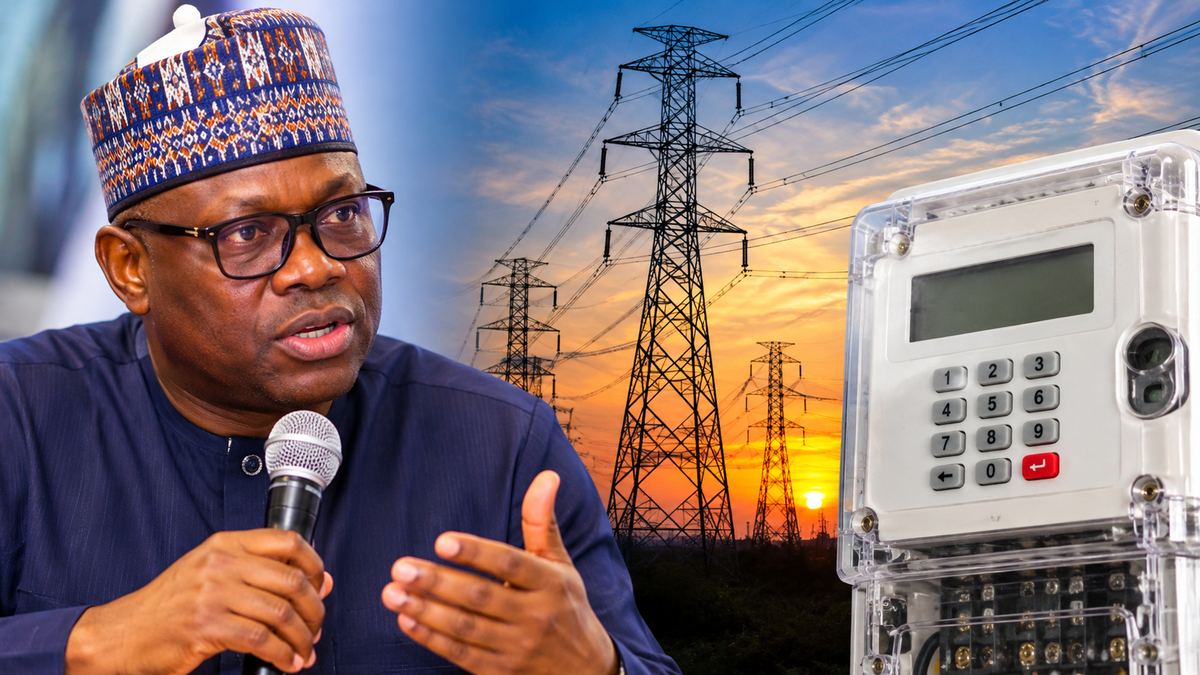
The Federal Government has again dismissed reports of an impending increase in electricity tariffs, assuring Nigerians that the administration has no plan to raise electricity prices nationwide.
The Minister of Power, Joseph Tegbe, reiterated the government’s position on Thursday, October 15, 2026, stressing that the administration was more concerned with improving electricity supply than imposing additional financial burdens on consumers.
Speaking at the groundbreaking ceremony for a 17.7-megawatt interconnected mini-grid project in Ibadan, Oyo State, Tegbe said the government’s objective was to build a power sector capable of providing reliable electricity around the clock.
According to the minister, the government is committed to increasing available electricity, improving supply reliability and ensuring that power infrastructure translates into tangible benefits for households, businesses and industries.
He urged Nigerians to disregard reports suggesting that a tariff increase was imminent.
The latest clarification follows previous assurances by the minister that the government had no immediate policy to increase electricity tariffs beyond existing levels.
FG Prioritises Improved Power Supply
The Federal Government maintains that improving electricity supply, expanding metering coverage and strengthening critical infrastructure remain central to its ongoing power sector reforms.
Tegbe has argued that increasing electricity prices should not be the immediate priority when consumers are still grappling with unreliable power supply.
The government has also pledged to expand access to prepaid meters to reduce estimated billing and ensure that consumers pay for the electricity they actually consume.
As part of the reform programme, the administration has pursued interventions to improve generation, strengthen transmission infrastructure and address longstanding financial challenges affecting the electricity market.
The minister has also acknowledged the need to protect vulnerable households from the effects of reforms in the sector.
The government’s position is that consumers should experience improvements in electricity supply and service delivery rather than face additional costs without corresponding benefits.
Why Electricity Subsidies Remain a Concern
Despite the government’s assurances against an immediate tariff increase, the financial sustainability of electricity subsidies remains a major issue in the sector.
In July 2026, Tegbe announced that the government intended to phase out electricity subsidies from 2027 as part of efforts to address mounting liabilities and establish a more sustainable electricity market.
The minister said the government was seeking ways to resolve outstanding debts in the sector while preventing the continued accumulation of financial obligations.
Nigeria’s electricity market has struggled with a persistent gap between the cost of supplying electricity and the revenue recovered from consumers.
Where approved tariffs do not cover the recognised cost of electricity supply, the resulting shortfall may require government intervention or other funding arrangements.
The government has argued that the existing financial structure cannot be sustained indefinitely without reforms.
On October 9, Tegbe reportedly reiterated that the government could not continue covering tariff shortfalls indefinitely while attempting to expand electricity supply nationwide.
His comments have renewed questions about how the administration intends to balance its commitment to affordable electricity with the need to improve the financial health of the power sector.
However, the minister’s statements on subsidy reform do not, in themselves, amount to an announcement of an immediate tariff increase.
The Argument for Tariff Reform
Supporters of cost-reflective electricity tariffs argue that the current funding structure places considerable pressure on public finances and limits the ability of electricity operators to meet their obligations.
They maintain that when electricity companies cannot recover the recognised costs of supplying power, the resulting financial pressure can affect their capacity to maintain infrastructure, pay suppliers and invest in improvements.
From this perspective, a more financially sustainable tariff structure could encourage investment, improve operational efficiency and reduce dependence on government funding.
Proponents also argue that a financially viable electricity market is necessary to support long-term improvements in generation, transmission and distribution.
However, the expected benefits depend on how reforms are implemented, whether electricity supply improves and whether the additional revenue is used effectively.
A tariff adjustment alone would not automatically resolve the sector’s problems, particularly where electricity supply remains unreliable or distribution companies struggle with operational inefficiencies and revenue collection.
Why Consumers May Oppose Any Increase
For many Nigerians, the prospect of higher electricity bills raises concerns about the cost of living and the affordability of basic services.
Households and businesses already face significant operating expenses, including food, transportation, rent and the cost of alternative electricity sources such as petrol and diesel generators.
An increase in electricity tariffs could place additional pressure on household budgets and business operating costs, particularly for small enterprises that depend on electricity for daily operations.
Consumers may also question the justification for paying more when power supply remains inconsistent in many communities.
For businesses, unreliable electricity can mean higher production costs, reduced operating hours and greater dependence on privately generated power.
Consequently, any future tariff reform is likely to attract scrutiny over whether improvements in electricity supply will match the financial burden placed on consumers.
Consumer protection, transparent billing, effective regulation and reliable service delivery are therefore likely to remain important considerations in the debate.
The Question of Subsidy Removal
The central issue is whether the Federal Government can reduce its financial exposure to electricity subsidies without making electricity unaffordable for vulnerable Nigerians.
Although the government previously indicated that it intended to phase out subsidies from 2027, its subsequent assurances against an immediate tariff increase have created uncertainty about the precise timing and implementation of the proposed reforms.
The distinction is important: ending or reducing subsidies does not necessarily mean that every consumer’s tariff will increase immediately by the same amount.
The eventual impact would depend on the policy adopted, the tariff categories affected, the treatment of vulnerable consumers and any measures introduced to cushion the consequences.
The government would also need to explain how it intends to finance the sector’s outstanding obligations and support infrastructure improvements if public subsidies are reduced.
Until the details are clearly communicated, uncertainty over the future of electricity pricing is likely to persist.
What Nigerians Should Expect
For now, the Federal Government’s publicly stated position is that there is no immediate plan to increase electricity tariffs.
The administration says its priority is to improve supply, strengthen the electricity network, expand metering and move towards more reliable power delivery.
Nevertheless, the government’s earlier statements on subsidy reform and its concerns over the cost of covering tariff shortfalls indicate that the financial structure of the electricity market remains under review.
The key issue is whether the proposed reforms can deliver more dependable electricity without imposing unsustainable costs on households and businesses.
For consumers, the outcome will depend not only on the government’s tariff policy but also on the quality of service, transparency in billing and the effectiveness of measures designed to protect vulnerable customers.
As discussions over subsidy reform continue, Nigerians will be watching to see whether the administration can reconcile its promise of affordable electricity with its ambition to build a financially sustainable power sector.
Polity Nigeria will continue to monitor developments in the electricity sector and report any official decisions affecting tariffs, subsidies and consumers.