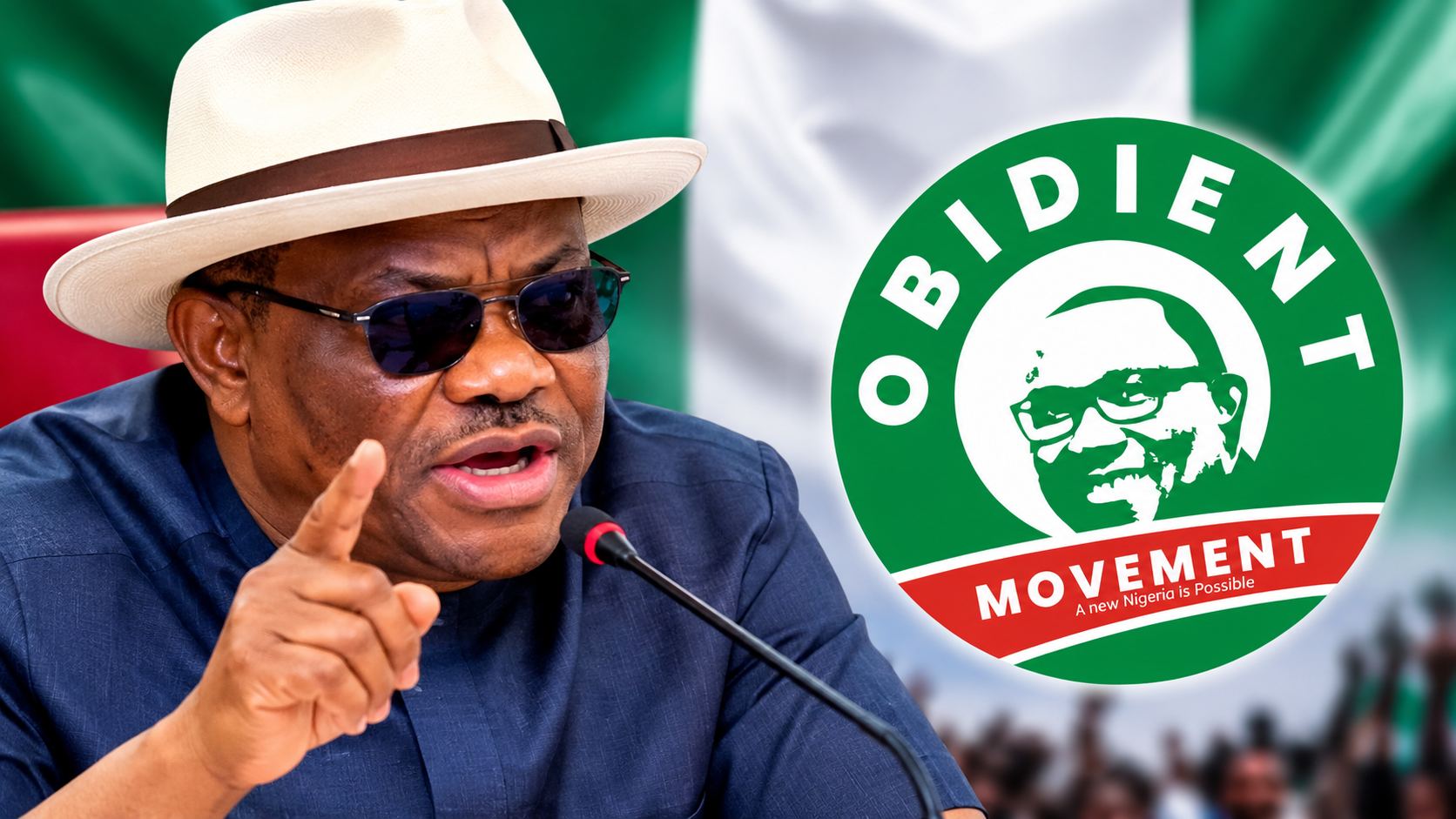
Minister of the Federal Capital Territory (FCT), Nyesom Wike, has declared that Rivers State and the FCT will vote massively for President Bola Tinubu in the 2027 presidential election, prompting a warning from the Obidient Movement against any attempt to interfere with the electoral process.
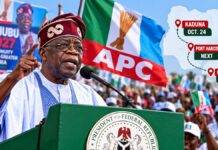
Wike made the declaration on Wednesday, October 14, 2026, during the inauguration of the All Progressives Congress (APC) Presidential Campaign Council at the Presidential Villa in Abuja, where he pledged to mobilise political support for Tinubu’s re-election bid.
The former Rivers State governor had earlier announced that he would coordinate the President’s re-election campaign in Rivers State and the FCT, describing himself as the field commander responsible for political operations in the two territories.
Speaking at the inauguration, Wike expressed confidence that both areas would deliver substantial votes for Tinubu, insisting that campaign coordinators would be judged by their ability to secure electoral victories in their respective jurisdictions.
He also maintained that his position within the Peoples Democratic Party (PDP) did not prevent him from supporting what he considered the achievements of the Tinubu administration.
Wike’s declaration has, however, drawn criticism from the Obidient Movement, which cautioned the minister against making statements that could raise concerns about the credibility of the 2027 general election.
In a statement issued on Wednesday through its Media and Communications Directorate, the movement stressed that no politician or political party had the authority to determine electoral outcomes before Nigerians cast their ballots.
The group argued that coordinating a political campaign did not confer ownership of voters or give any individual control over the electoral process.
According to the movement, Rivers State belongs to its people, while the FCT belongs to Nigerians, insisting that neither territory should be treated as the political property of any politician, party or influential political figure.
The Obidient Movement challenged Wike and the APC to seek votes by presenting their policies, defending the administration’s performance and persuading Nigerians to support their preferred candidate.
It maintained that the ultimate decision on who governs the country must rest with the electorate through a free, fair and credible electoral process.
Obidients Call on INEC, Security Agencies to Act
The movement also called on the Independent National Electoral Commission (INEC) and security agencies to demonstrate impartiality and strengthen safeguards against voter intimidation, electoral manipulation and other forms of malpractice ahead of the 2027 elections.
It urged electoral authorities to ensure that all political parties and candidates operate under the same rules, irrespective of their connections to influential political figures.
The group further called on Nigerians to remain vigilant, document suspected electoral irregularities and report credible evidence to the appropriate authorities.
It warned that anyone found attempting to manipulate election results should face the consequences prescribed by law, regardless of political affiliation or official position.
The movement’s response reflects growing political scrutiny of the alliances and mobilisation strategies emerging ahead of the 2027 general election.
Political Implications for Rivers and the FCT
Wike’s declaration introduces another dimension to the political contest ahead of the 2027 elections, particularly given his position as an FCT minister and his continued association with the PDP despite his support for Tinubu’s re-election.
His commitment to mobilising support for the President in Rivers State is also significant because of his previous position as governor of the state and his continuing influence in its political landscape.
However, a declaration of political support does not automatically translate into electoral victory. The eventual outcome will depend on voters’ decisions, campaign activities, party organisation and the conduct of the electoral process.
For the FCT, the political contest will similarly depend on the preferences of eligible voters across its six area councils.
While Wike has expressed confidence in Tinubu’s prospects in both territories, the Obidient Movement has insisted that no political leader can predetermine how Nigerians will vote.
As political activities intensify ahead of the 2027 general election, attention will increasingly focus on how competing parties and political groups seek public support and whether electoral institutions can guarantee a credible process.
Ultimately, the responsibility for determining the next president rests with Nigerian voters, while INEC remains responsible for conducting the election in accordance with the law.